The Essentials


In case you haven't been outside lately, we are in the dog days of summer. It's hot, really hot. For me that means two things. First, fishing is slow; and secondly, it is at times unbearable to be out for too long in the heat. Therefore I have been fishing much less and have not had much exciting news to publish. So for fun I thought I would write up a brief post on what I consider to be my essential lures. Those which have proven themselves as producers when others fail. So here it is, in no particular order, my top 10 lures. 

1.) Mepps Aglia


The Mepps Aglia, which my family and I refer to as simply a Mepps, was perhaps my first essential lure in becoming an angler. Having gained my love for fishing in Northern Minnesota, the Mepps Aglia is a consistent producer of Northern Pike and always provides action when nothing else is working up north. Size #5 and Musky Killer are great for Northern Pike. Size #3-5 work great on Large and Smallmouth Bass. I use #3 on Wiper, #1-2 for Trout, and #0 seems irresistible to Panfish. 

2.) Spinnerbait 


Semi-weedless, versatile, and available in a variety of styles; Spinnerbaits are essential lures every angler should have a few of and know who to fish correctly. Whether you hop it along the bottom, bounce it off fallen timber, or burn it along the surface; Spinnerbaits are deadly against Bass, Northern Pike, Muskellunge. When choosing one consider the size, color, and blade type. Spinnerbaits commonly employ either Colorado, Indiana, or Willow style blades. The Willow, as pictured above, is a long style blade which is tapered on either end like that of a willow leaf. It creates the least resistance of the three styles and thus will have a deeper retrieve and create less water displacement for a more subtle approach. The Indiana style is also a long blade style, but rounded on each end. It serves as an intermediary between the Willow and Colorado extremes. The Colorado is a large rounded blade which causes the most water disturbance, allowing the lure to ride high in the water and displaces a large amount of water helping to lure in actively feeding fish. 

3.) Original Rapala


The Original Floating Rapala is what launched angling into the frenzy over crankbaits that we find ourselves in today. While much has changed over the years, the Original is still a productive lure. It does not dive deep, nor does it have the tightest action, but this crankbait does imitate a wounded minnow very well. I typically employ it as either a slashbait or in stop and go retrieve and find it to be invaluable when fishing from shore, because it has a large amount of space between the eye and first treble hook and due to the fact that it floats. The Original allows you to fish a crankbait from shore while avoiding snags and hookups. 

4.) Jitterbug


One of the most enjoyable lures to fish. The Jitterbug has an unmistakable sound and action which has allowed itself to become one of the most productive Bass topwater lures of all time. The Jitterbug imitates a wounded baitfish struggling on the surface. If you buy just one, buy it in black and fish in low-light conditions. 

5.) Jig


In some ways the Jig is more terminal tackle than a lure, in that to fish it you need to add something to it rather than throw it in the water as is. Yet this speaks to its adaptability rather than its limitations. Perhaps the most important lure for Walleye anglers. The Jig is often tipped with a worm, leach, or minnow and slowly bounced along the bottom. Bass and Crappie anglers often add a plastic grub, and others simply tip it with bait and suspend it from a float. Regardless of your methodology, buy several different colors and sizes. 

6.) Salmo Hornet


A staple of Walleye fisherman, this relatively new lure from Poland is known for its tight action and quality control. While it can be cast, its light weight makes this somewhat prohibitive, and so it is most often used while trolling. I most often use size #4 and have caught more Walleye with this crankbait than any other. The Salmo Hornet is generally available in a floating variety but a sinking edition is now becoming commonplace for deep water applications. This is my father's favorite lure.

7.) Casting Spoon
                                 

The spoon may be one of the most basic artificial lures in modern angling. Typically one side is painted and the other side is plain metallic. The shape and color cause the lure to wobble and flash as it is retrieved through the water. A great multi-species lure, match the size to the target fish. 


8.) Plastic Worm 


My personal favorite for catching bass. Wether you fish it in a Carolina, Texas, or Wacky Rig the plastic worm is one of the most effective tools for landing bass in a variety of conditions. See my rig series for specific rigging tactics and retrieves. Buy many colors and styles, this will be one of the cheapest items in your tackle box. A few of my favorites are the Gary Yamamoto Senko, Berkely Powerworm, and Zoom Trickworm. 

9.) Beetle Spinner


In many ways similar to the Spinnerbait, the Beetlespinner is an adaptation which uses a spinning jig harness, jig, and plastic grub. While you can buy Beetlespinners pre-rigged I prefer to buy the parts seperatly and build my own to suit my personal needs. This allows you to control the weight, size, and grub type. I most often often use small Crappie tubes for my grub and have been very impressed this year with a grub called "The Slab Buster", which comes garlic pre-scented. I would guess I have caught more fish on a Beetle Spinner than on any other lure. 

10.) Rapala Shad Rap


If you own one crankbait, it should be the Rapala Shad Rap, due to its versatility in the models offered and appeal to a multitude of species. The reason for this is its shape: thin enough to pass as a minnow imitation, for nomadic feeders like Stripped Bass and Walleye, yet has an erratic enough action to imitate small gamefish, in order to entice Largemouth and Pike which feed from cover. Size #5-7 seems to be ideal for most purposes. Shallow and deep diving varieties are available as are models with and without rattles. 


Minnesota Vacation '10


I just returned from my annual trip to Bass Lake in Minnesota. As always I had a great time, enjoyed the beautiful country around me... oh and I did some fishing. This year I hit four bodies of water Bass Lake, Deer Lake, Lake Winnibigoshish (Winnie), and the Mississippi River. Deer Lake was a beautiful body of water, very clear and blue, and I caught a lot of Rock Bass and one Largemouth and one Smallmouth. Also the first time I fished Winnie, the fifth largest lake in Minnesota, did very well on Walleye. Overall Fishing was good but slower than last year and we had some windy days that made boat control a bit difficult. I went in to last week with two goals: catch a Northern Pike on my fly rod and catch a 10 lbs Northern Pike on Bass Lake. I achieved the first but not the second. To be honest I came away a bit bummed that I didn't boat a large Pike but that's fishing and the appeal and challenge of the sport. Some days you can't pattern the fish and there is always more to learn. Here are the pictures of the trip: 


Evening on Bass Lake


Nice Walleye from my Dad, bottom bouncer and leech on snell. Lake Winnie


Bass Lake Largemouth: despite its name catching Bass, Smallmouth or Largemouth, on that lake is always a challenge. Wacky Worm


First Northern Pike caught on a fly rod. 8 weight rod, Clauser Fly


Engine blew on my Uncle's pontoon. It was my job to be Theodore Tugboat and bring them to shore. 


Nice Bluegill. Jig 


Fly fishing the Mississippi River


Nice Northern Pike from Chris. Mepps Aglia #5


Baby Ducks


My first Walleye of the trip. Bottom bouncer and leech on Snell. Lake Winnie.


Smallmouth from Chris at the Mississippi. Wacky Worm


Another Pike on Fly Rod. They put up a good fight. Clauser Fly


Fishing the reeds at Bass Lake.


A few Walleye from Winnie, thanks to guide Reed Ylitalo. 


Lots of Rock Bass caught. Feisty little guys. Wacky Worm 


Chris working really hard on Winnie to catch Walleye. 


My Mother's Northern Pike. Mepps Aglia #5 

Rig Series: Wacky Rig


The Wacky Rig was developed a few years ago in Japan. Since then it has apparently been boiling under the surface as the new secret of the Pro's. The problem with professional tournament angling is if your matches are televised your technique is bound to get out. However, unlike most new techniques billed as the hot new thing in fishing--this rig works. Let me reemphasize, it really works well and will help catch a lot of bass. I promise. 

At first glance one may be repelled by its simplicity and awkward appearance. It looks anything but sexy or sleek and its not but it is subtle. Setting it up could not be easier. I use two approaches. In both I use a straight plastic worm with no tail. I prefer the Gary Yamamoto Senko and the Jackall Fick Shake. In still water I take a size 1 wide gap hook and hook the worm straight through the middle; in water with current I substitute a light jig head for the wide gap hook. 

To fish it simply cast along side a fallen timber pile, under low brush, in holes in a weed bed. Let the worm fall straight down to the bottom, let it sit for a few seconds then jerk the worm up and let it fall again. Strikes will almost always come on the fall. If this fails try slightly moving your rod tip up and down as the worm falls to impart more action. If fish are there you will get a bite. 

A sensitive rod is crucial for this approach in order to feel the fish take the worm. Most often they will tap the worm a few times like a Walleye and then you will see your line start to move. When this happens reel in your slack and set the hook. If you attempt to set the hook too early or before you have felt the fish fully on with your rod you will lose your worm as the bass is most likely just mouthing it.


Above: Senko 5" Worm with Owner Size 1 Wacky Hook
Below: Jackall Flick Shake Worm with Weedless Jig Head
*Fish pictured is 4.5 lb Largemouth Caught on Wacky Rig

One of the Best Feelings in the World


Just got this picture from the guide in an email. I always love the feeling of rehabilitating a fish after you have caught it and watching it swim away but it was a particularly surreal feeling on a Muskie, knowing it will go on to grow, thrive, reproduce and on some other day be caught again and give someone else that same excitement only this rare North American giant can produce.

Muskellunge


This weekend my father and I went to Duluth, MN to fish for Muskie. I have been in love with the sport of Muskie fishing for a long long time, ever since I started traveling to Minnesota to fish. Muskellunge are large beautiful fish, apex predators and the culture surrounding them is very conservative minded. To keep a fish is almost a mortal sin amongst most anglers.

Muskie are called the fish of 10,000 casts and are notoriously elusive. The Wisconsin DNR notes on their website that the average density for Muskie on a lake is one fish every three acres and that it takes most anglers 30+ hours on the water to catch one fish. Talk to anglers who chase Muskie and seeing one is a good day. Well since we would only be fishing one day on this trip we went out with Pete Brzezinski of Muskie Northland Adventures. Last year alone Pete boated over 100 Muskie himself and many more for clients. His experience paid off: we caught three Muskie and saw four others. We caught two on bucktails and the third on a spinnerbait. Of the four we saw I lost one on a follow due to not going into a figure 8, one hit my lure from underneath throwing it into the air, we had one throw the lure out after being hooked, and one was lost during a figure 8. Of the three I boated two and my father caught one. It was a spectacular time and I am already looking forward to a few weeks from now when I will be in Minnesota again this time chasing Northern Pike. Here are the pictures:


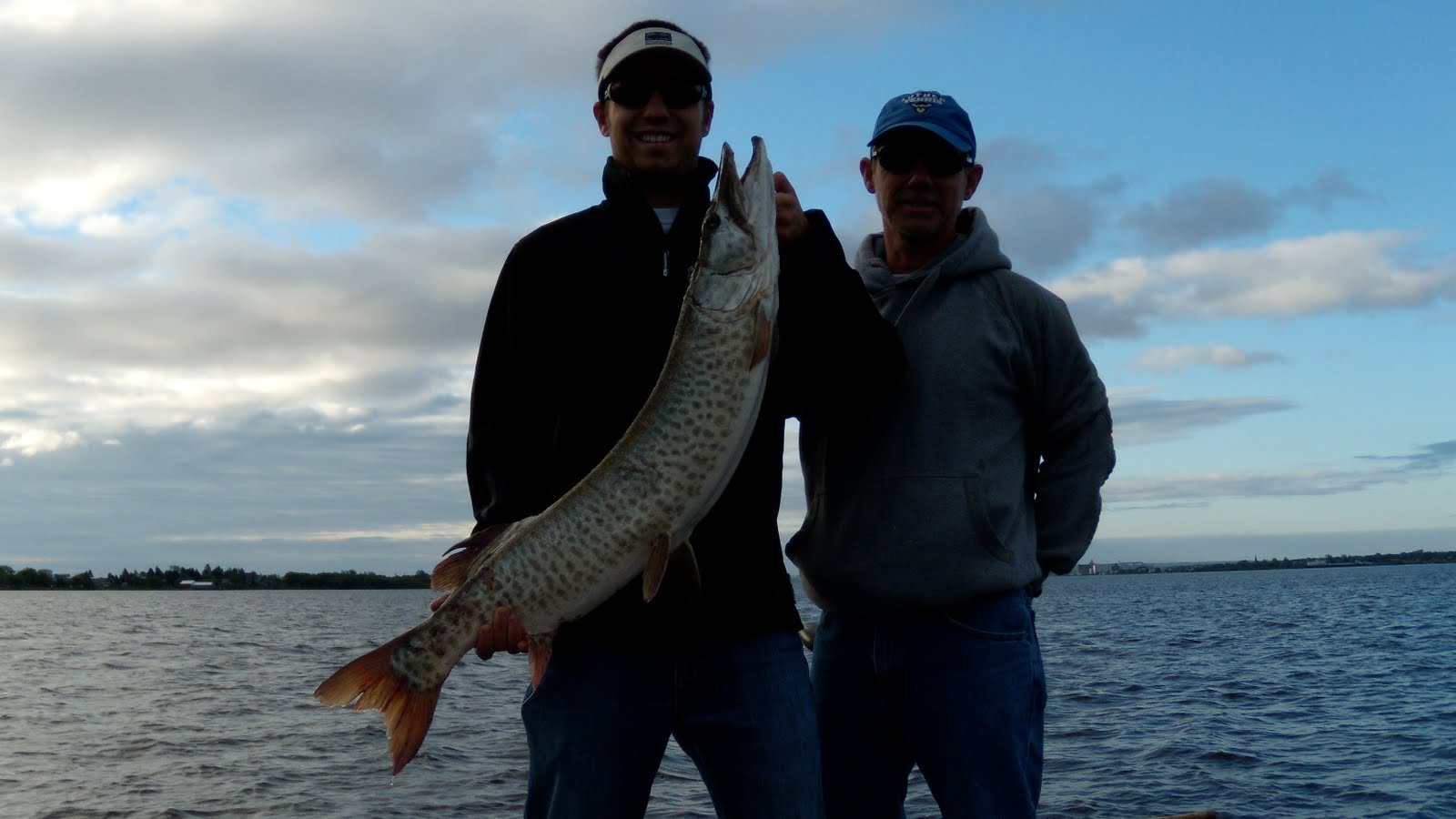
The second and biggest fish of the day, a 44 I boated that my dad is holding. It was a strong fish. 


This was the first fish of the day, a 41 that hit really hard. I couldn't have asked for a better way to spend a weekend with my Dad. Despite the long drive it was well worth the time in the car and on the water spent with my father. 


My Dad learned from my previous mistake and didn't fail to figure 8 after each cast. After thinking we lost him on the first figure 8, he nailed the lure on second one. Nice 36.5. 


Lake Superior

Parma Woods


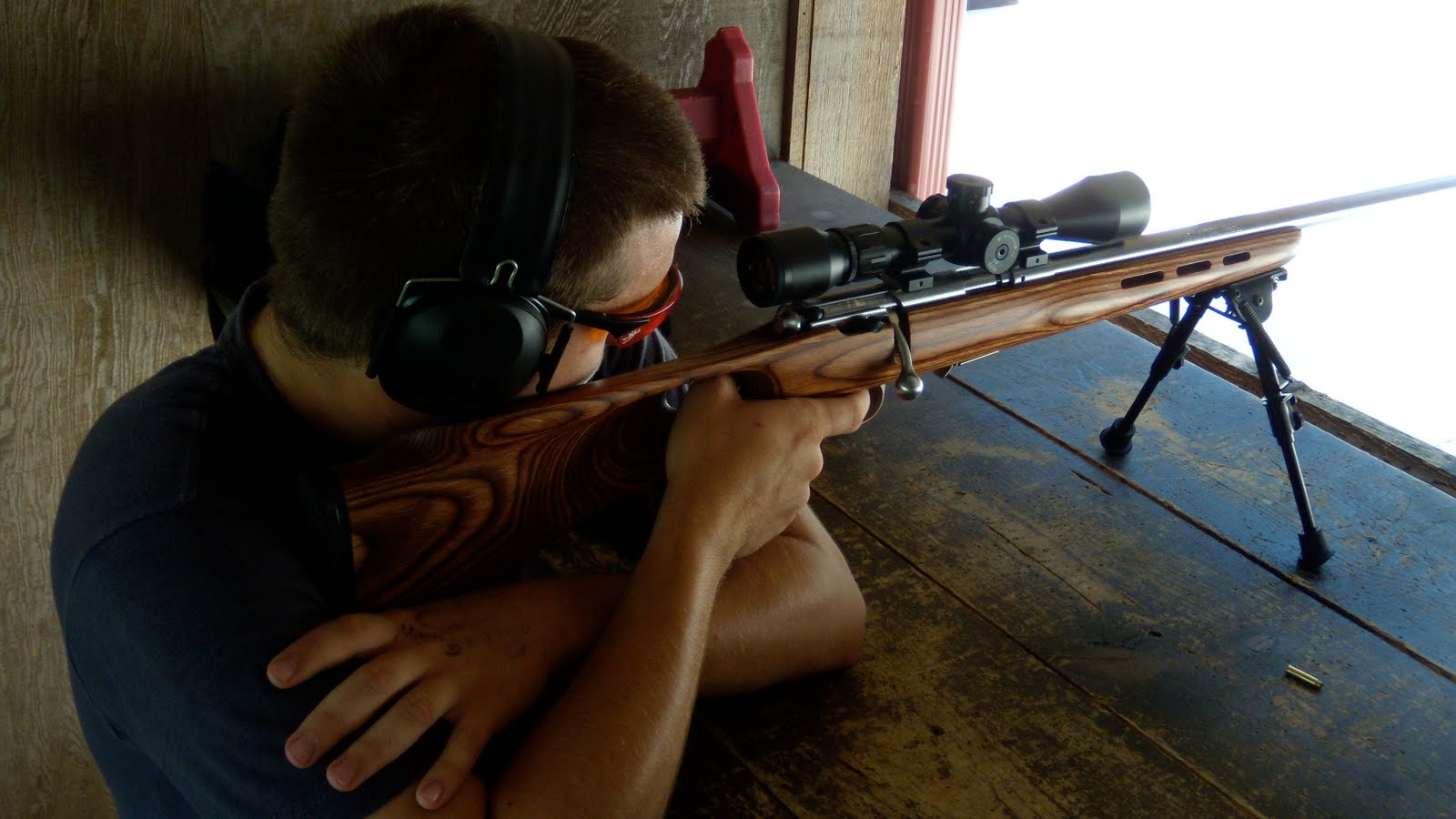
Over the past two weeks I have taken both my cousin and a friend to Parma Woods for the first time. My cousin shot my Rifle, first time shooting a gun, and my friend fired her new Browning Buckmark Camper Pistol. They both greatly enjoyed their time and Andrea has already been back.

Parma Woods is a rifle/shotgun/pistol range located by Parkville, Missouri, just north of Cabelas. The rifle range sets targets at 25, 50, 75, and 100 yards. Pistol Range is 7, 15, 25, 50 yards. The best thing about the range is it is open to the public year round and it costs only $3 an hour. The only concern you may have is if shooting a firearm in a milatary caliber, ie. a .223 or .308 your ammunition must be inspected and approved.

Both Andrea and Brandt shot well for the first time using the guns and I did fair shooting approximately 2 MOA at 100 yards. My goal in this next year is to get it down to 1/2 MOA. Here are the pictures:


My cousin Brandt. 


Me shooting my rifle, a Savage 93R17 BTVS. Chambered in .17 HMR


Andrea shooting her new pistol. I was super impressed with the simplicity and accuracy of that gun. 


Rig Series: Texas Rig


I have heard it said on several occasions that more Bass Masters Tournaments have been won using the Texas Rig than any other lure. Don't get me wrong, Spinnerbaits produce great in the morning as bass are warming up. Top water is highly effective on calm nights and fun as hell. You can run and gun the edge of cover with crankbaits, especially during the spawn. But what do you pull out of your tackle box when they are just not biting on a hot summer day? With the increase in temps during mid-day the fish become lazy and some finesse is required. Its time to call in the Texas Rig.

Rigging the Texas Rig is simple. You need a curly tail worm, offset worm hook, and possibly a bullet weight. To rig it traditionally first place the bullet weight on your line pointed up. Next tie on your offset worm hook. Finally thread the hook into the top of the worm down the first 1/2 inch or so and then exit through the side. Now thread the hook back through the worm where the bottom of the hook meets it and push it through--but not all the way. The hook should be just under the other side of the worm but not penetrating. This makes it virtually weedless until a Bass bites setting the hook. For a even slower presentation do it exactly the same but forget the bullet weight. This is a more subtle approach for even greater finesse or great if your fishing really thick cover and your bullet weight starts catching weeds. 


This is what it should look like. I prefer darker colors in clear water and brighter, larger worms in murky waters or at night. 

Finally, since this is the first rig I have mentioned that uses plastics let me add that often you need to wait a second or two once you feel the fish start to take the worm. A sensitive rod is crucial to differentiate a fish from a log jam or weeds and to know when the fish has truly taken the bait. If you try and set the hook too early, often you will lose the fish as it may only have hold of the tail of the worm. This takes some getting used to but with patience you will come to love this rig.

*Note picture is a 3 lb Largemouth I actually caught tonight on a Texas Rig. 

Cat On A Fly


Wednesday Bret and I went to Lonestar Lake with the Free State Fly Fishing Club. They fish together at one of the surrounding lakes every Wednesday night and I am going to start making it a point to go regularly, as it seems to be an awesome group of guys and I can think of no better way to get better at fly fishing than to learn from their experience. However, this is not the exciting news. I did mediocre to poor that night, only catching a Crappie and a Bluegill, but Bret did spectacular catching two Channel Catfish and a Bluegill on a Green Sarge's Crappie Fly. Not only was it great that he caught two nice cats, one of which was four and a half pounds, on a fly rod but they were also the first fish he caught on a fly rod. Great job Bret. Pictures below.


Bret's first fish on a fly rod.


Ron and Bret with the first cat. 


The 4 1/2 Pounder! Tore that fly up. 

Happy Birthday Walleye


For this past weekend my parents came down to Lawrence on a surprise visit. Sunday we rented a boat and went fishing for a few hours on Hillsdale Reservoir. Caught plenty of Wiper, Crappie and one Walleye. The most productive lure of the day was by far a Salmo #4 Hornet crankbait in blue and silver. Salmo crankbaits have long been a productive bait for my Dad and I for several years, information we picked up from a guide in Minnesota. They dive between 6-12 feet dependent on how far out they are and have a tight distinct action. 

Here are the pictures:


First Crappie of my Father's life. 


World Record Class Wiper


My Birthday Walleye, just under 3 lbs. Caught on beetle spinner. 


And finally a nice Crappie from Alexander the previous week at Hillsdale. 

Rig Series: Slip Rig


I have decided to do a short series on a few basic rigs every angler should know how to use and in what situations to use them in. Things are warming up outside which means prime Catfish season so I will start with one of the most basic rigs of them all, the slip rig. 

To set up this rig you will need a circle hook, bead, barrel swivel, and either an egg sinker or a no roll sinker. First cut a section of your main line to the desired length of your leader. Now thread through your sinker onto your main line followed by a bead, if you are using a no roll sinker have the pointed end face your reel. Next tie the barrel swivel to your main line, I use the palomar knot here. To the other end of your swivel tie your leader on, I use the improved clinch knot. At the end of your leader tie on your circle hook. Your done. 

This rig allows the catfish to take your bait with very little resistance. I like circle hooks in this rig for two reasons. First they almost always hook the fish in the corner of the mouth making it easier to remove and less stress to the fish for catch and release. Secondly the fish sets the hook itself when the fish turns after swallowing your bait, taking the pressure off you to know when the right time is to "set the hook" and reducing lost fish. Length of leader is determined by the current and cover. The longer the leader the more play it will have, especially important if you are fishing live bait. However, it also increases the chances of your hook tangling on cover or wedged in rocks. If you are fishing a with very high flow such as a spillway don't use a leader or barrel swivel. Allow bead and sinker to come right up to the hook. The purpose of the bead is to provide a buffer between the knot and the sliding sinker. Often times we use large sinkers in excess of 3 ounces and the force of the weight slamming into the knot can weaken it or knock your leader straight off.

If you are fishing dough baits you may substitute a circle hook for a treble hook, dip bait hook, or sponge. When fishing this I enable the clicker on my baitcaster to both give me an audible warning on when the fish is on and to also let the fish take out some line with very little resistance. You can also modify this rig by using lighter weights or a roach walker weight for Walleye and Trout fishing. 


Top slip rig set up for catfish, bottom for Walleye or Trout. 

First Herping Trip of 2010


It's springtime in Kansas. What does that mean, well fishing naturally but also herping. The other day my friend Andrea and I went out to Clinton hoping to find some reptiles and amphibians to catch and photograph and I was hoping to find a Copperhead or two. Well, no snakes but here is what we did find: 


American Toad, Bufo americanus


These guys were everywhere, mostly rocks faces and in shallow/still water: Blanchard's Cricket Frog


Blanchard's Cricket Frog, Achris crepitans


These guys are fast, I think I chased him around for 15 minutes. Never did catch him, only a photo: Prairie Racerunner, Aspidoscellis sexlineata 

Return of the Beetle Spinner


The other day I went out to Lone Star Lake to pursue some Crappie. I haven't caught any this year and I have heard they have been striking well at Lone Star. For my presentation I started out with minnows on a slip bobber. I chose a slip bobber because I was concerned that the cold front would be pushing the fish deeper and the slip bobber easily allows me to adjust the depth of my presentation. Good plan right ... well no fish. Shallow, deep, several locations, no fish. 

Taking note I changed my presentation to a beetle spinner. Over the years I have always been able to catch more Crappie on a beetle spinner than any other technique consistently. A beetle spinner looks very similar to a traditional spinner bait and is simply a jighead/grub attached to a spinning harness. You can buy them already set up but I prefer to buy several styles of harnesses, grubs, and jigs and make my own. Truth be told if I could only use one fishing lure. It would be a beetle spinner. I have caught loads of Crappie on it, as well as Largemouth Bass, Yellow Perch, Walleye, Northern Pike, Sunfish, and even a small Muskie. Never anything huge but it always seems to produce. On your retrieve treat it like a spinner bait. The three which work best for me are a slow rolling retrieve, bounce it off the bottom, or a slow consistent glide just over a weed bed or cover. 

So how did I do, well no Crappie, but four largemouth's and a channel cat in an hour is always welcome.